

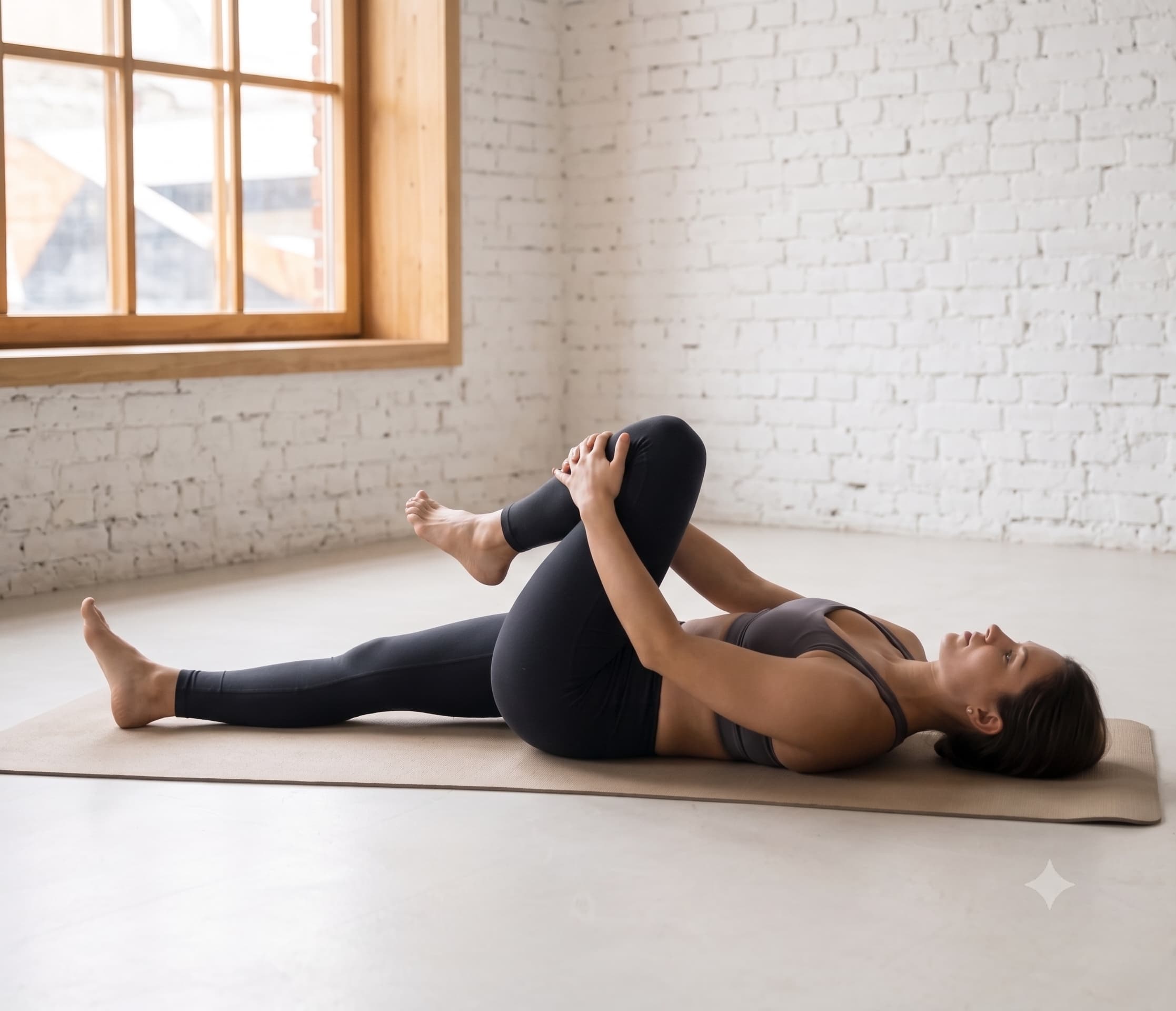
Sciatica vs. Piriformis Syndrome: Identifying Shooting Pain in Lifters
You are stepping up to the platform for a heavy set of deadlifts, or perhaps you are dropping into the bottom of a heavy back squat. As you drive through the floor to stand up, you suddenly feel a sharp, electrifying jolt of pain deep in your glute. By the time you rack the barbell, that sharp pain is shooting down the back of your leg.
For the next few days, sitting at your desk or driving your car becomes an agonizing chore. You find yourself constantly shifting your weight, trying to stretch out your hamstring, and aggressively rolling your glutes on a lacrosse ball, but nothing seems to permanently turn the pain off.
For weightlifters, CrossFit athletes, and active individuals across Burnaby, shooting leg pain is one of the most terrifying training setbacks. The immediate assumption is usually, “I blew out a disc and gave myself sciatica.”
While a lumbar disc injury is certainly a possibility, it is far from the only culprit. In the sports rehabilitation world, we frequently see a completely different mechanical issue mimicking these exact symptoms: Piriformis Syndrome.
Understanding the clinical difference between true sciatica and piriformis syndrome is the crucial first step to getting back under the barbell safely. If you aggressively stretch a compressed nerve, you will actually make the injury worse. If you treat a muscle spasm like a spinal disc injury, you will waste weeks of valuable training time.
If you are looking for evidence-based sciatica pain relief in Burnaby, this comprehensive guide will break down the anatomy of the sciatic nerve, how our clinicians diagnose the true source of your pain, and the targeted rehabilitation strategies we use to bulletproof your lower body.
The Anatomy of the Sciatic Nerve
To understand why these two conditions are so frequently confused, you have to understand the massive anatomical superhighway that is the sciatic nerve.
The sciatic nerve is the longest and thickest nerve in the human body—at its thickest point, it is roughly the width of your thumb. It does not simply start in one place; it is formed by a bundle of nerve roots exiting the lower segments of your spine (specifically the L4, L5, S1, S2, and S3 nerve roots).
These nerve roots branch out from the spinal cord, merge together deep inside the pelvis, and form the main sciatic nerve cable. This massive cable then exits the pelvis, traveling directly underneath a small, pear-shaped muscle deep in your glutes called the piriformis. From there, it runs straight down the back of your thigh, branching off behind your knee to supply sensation and motor control to your lower leg, calf, and foot.
Because this nerve spans such a massive distance, it can be pinched, compressed, or irritated at multiple different structural checkpoints. Where that compression happens determines your diagnosis.
What is True Sciatica (Lumbar Radiculopathy)?
True sciatica—clinically referred to as lumbar radiculopathy—is a spinal issue. The nerve is being compressed or chemically irritated at its very origin point, right where the nerve roots exit the lumbar spine.
The Mechanism of Injury
In lifters and functional fitness athletes, true sciatica is most commonly caused by a lumbar disc herniation or a bulging disc.
Between each of your spinal vertebrae, you have a flexible, fluid-filled disc that acts as a shock absorber. When you perform heavy deadlifts or kettlebell swings with poor core bracing mechanics (specifically, allowing your lower back to round under a heavy load), you create a massive, uneven shearing force across these discs. This pressure can cause the soft inner gel of the disc to bulge outward, or even break through the outer wall, pressing directly against the highly sensitive sciatic nerve roots.
Other causes of true sciatica include lumbar spinal stenosis (a narrowing of the spinal canal) or degenerative disc disease, though these are more common in older populations rather than acute sports injuries.
The Classic Symptoms of True Sciatica
- The Pain Travels Far: Because the nerve is compressed at the absolute source, the pain, numbness, or tingling typically travels all the way down the leg, past the knee, and often directly into the calf or the toes.
- Worse with Spinal Flexion: The pain typically aggressively spikes when you bend forward at the waist (lumbar flexion), such as trying to touch your toes or reaching down to pick up a barbell.
- The Cough/Sneezing Effect: Because it is a spinal pressure issue, coughing, sneezing, or bearing down (like when holding your breath for a heavy lift) drastically increases intra-abdominal and spinal pressure, instantly sending a shock of pain down the leg.
- Neurological Deficits: You may experience true muscle weakness, such as your foot dragging when you walk (foot drop) or a total loss of sensation in specific parts of your foot.
What is Piriformis Syndrome (Deep Gluteal Syndrome)?
If true sciatica is a spinal problem, Piriformis Syndrome is a peripheral muscle problem. In this condition, the spinal discs and nerve roots are perfectly healthy. Instead, the sciatic nerve is being compressed further down the chain, specifically where it travels underneath (or in some anatomical variations, directly through) the piriformis muscle in the deep glute.
The piriformis muscle is an external rotator of the hip. Its primary job is to turn your leg outward and stabilize your pelvis when you are walking, running, or shifting weight onto one leg.
The Mechanism of Injury
Lifters usually develop piriformis syndrome due to repetitive mechanical overload and gluteal imbalances. If you perform heavy, high-volume squats but suffer from “glute amnesia” (underactive gluteus maximus muscles), your body will force the smaller piriformis muscle to work in overdrive to stabilize your pelvis. Over time, this tiny muscle becomes exhausted, hypertrophic (enlarged), and locked in a state of chronic, hypertonic spasm. Because the sciatic nerve runs directly beneath it, the swollen, spasming muscle clamps down on the nerve cable like a vice grip.
The Classic Symptoms of Piriformis Syndrome
- The Pain Stays Higher: While the pain can shoot down the back of the hamstring, it rarely travels past the knee and almost never reaches the foot. The epicenter of the pain is a deep, aching “toothache” sensation directly in the middle of the glute cheek.
- The Sitting Penalty: The pain gets significantly worse after prolonged sitting (which directly compresses the muscle against the nerve) or driving a car for long periods.
- Pain with External Rotation: The pain often flares up when you actively push your knees outward against resistance (like using a hip abduction machine) or when you drop into a deep, wide-stance squat.
- No Spinal Aggravation: Bending forward at the waist or sneezing generally does not cause a sudden spike in shooting pain, as the spinal nerve roots are uncompromised.
The Clinical Diagnostics: How We Tell the Difference
When an athlete walks into Strike Recovery & Performance dealing with shooting leg pain, guessing the diagnosis is not an option. Our Chiropractors, Physiotherapists, and Registered Massage Therapists utilize specific orthopedic tests to pinpoint the exact location of the nerve entrapment.
1. The Straight Leg Raise (SLR) Test and Slump Test
These tests are designed to put the entire sciatic nerve on maximum tension. While you lay on your back, a practitioner will keep your leg perfectly straight and slowly lift it into the air. If this causes shooting pain or numbness to fire down your leg before you reach 60 degrees, it is highly indicative of true spinal sciatica (a disc issue).
2. The FAIR Test (Flexion, Adduction, Internal Rotation)
This test specifically isolates the piriformis muscle. While you lie on your side, the practitioner will flex your hip, bring your knee across your body, and rotate the leg inward. This severely stretches the piriformis muscle. If this specific motion reproduces your deep glute pain or sends a familiar zing down the back of your thigh, it strongly points toward Piriformis Syndrome.
3. Deep Tissue Palpation
A skilled RMT or Chiropractor will palpate the deep structures of your posterior chain. A hypertonic piriformis feels like a thick, rigid, incredibly tender rope deep inside the glute. Pressing on this exact trigger point will often instantly reproduce the patient’s familiar nerve pain.
The “Stop Stretching It” Warning: Understanding Nerve Tension
The most common mistake lifters make when dealing with either of these conditions is aggressively stretching the painful leg. They throw their leg up on a box, lock their knee out, and reach for their toes, desperately trying to stretch out what they think is a “tight hamstring.”
Nerves are not muscles; they do not like to be stretched.
When a nerve is compressed, whether by a bulging disc or a tight piriformis, it loses its ability to glide smoothly through the surrounding tissues. If you aggressively stretch a trapped nerve, you are essentially pulling a snagged rope. This massive tensile stress damages the myelin sheath (the outer coating of the nerve), increases inflammation, and significantly delays your healing time.
Instead of static stretching, rehabilitation requires Nerve Flossing (or nerve gliding). A Physiotherapist or Kinesiologist will teach you specific, dynamic movements that gently pull the nerve from one end while providing slack at the other end. This “flossing” motion helps the nerve break free from restrictive scar tissue and reduces chemical irritation without subjecting it to damaging tension.
Rehabilitation for True Sciatica (Disc Involvement)
If your clinical assessment points to true lumbar radiculopathy, our treatment protocol focuses entirely on centralizing the pain and restoring spinal mechanics.
1. Extension-Biased Movements
If a disc is bulging backward into the nerve root due to excessive spinal flexion (rounding), we utilize extension protocols (like the McKenzie method) to gently push the disc material back toward the center of the joint space. This involves specific prone press-ups and standing back extensions.
2. Chiropractic Spinal Decompression and Adjustments
When the lumbar spine is locked up, the joint spaces where the nerves exit become unnaturally narrow. A Chiropractor will utilize precise spinal adjustments to restore proper motion to the lumbar segments. In cases of severe disc compression, mechanical spinal decompression therapy may be utilized to gently create negative pressure inside the disc, pulling the bulging material away from the nerve root.
3. Rebuilding Intra-Abdominal Pressure (IAP)
To prevent the injury from recurring the moment you return to the barbell, you must relearn how to brace. A Kinesiologist will train you to generate true intra-abdominal pressure. Core stability is not about doing sit-ups; it is about expanding your diaphragm and obliques 360 degrees to create an impenetrable cylinder of pressure that protects your lumbar discs during heavy squats and deadlifts.
Rehabilitation for Piriformis Syndrome
If the diagnosis is Piriformis Syndrome, the lumbar spine is safe, and we turn our full clinical attention to the neuromuscular imbalances of the pelvis.
1. Neuromuscular Soft Tissue Release (RMT)
You cannot out-stretch a muscle that is locked in a neurological spasm. A Registered Massage Therapist (RMT) will use deep, targeted ischemic compression, myofascial release, and trigger point therapy to forcefully downregulate the hyperactive piriformis. By manually releasing the muscle belly, the vice-grip on the sciatic nerve is instantly loosened, providing rapid pain relief.
2. Instrument Assisted Soft Tissue Mobilization (IASTM)
If the piriformis and surrounding deep hip rotators have developed thick, restrictive fascial adhesions over months of heavy lifting, we may utilize IASTM (muscle scraping) to break down these cross-linkages and restore normal tissue glide over the sciatic nerve.
3. Glute Medius and Maximus Activation
The piriformis usually spasms because the primary glute muscles are asleep at the wheel. A Physiotherapist will program highly specific exercises to wake up your gluteus maximus and gluteus medius. Movements like heavy banded glute bridges, lateral sled drags, and Copenhagen planks ensure that the massive muscles of the pelvis are doing the heavy lifting, allowing the tiny piriformis to finally relax.
4. Correcting Squat Mechanics (Fixing the Valgus Collapse)
When you squat heavy, do your knees violently cave inward at the bottom of the hole? This mechanical flaw—known as knee valgus—places immense, rapid eccentric stress on the external rotators of the hip (including the piriformis) to stop the collapse. Our active rehab team will analyze your lifting mechanics, adjust your stance, and train your abductors to prevent this energy leak, ensuring your lifting form is pristine and safe.
The Multidisciplinary Advantage at Strike Recovery
Whether your shooting leg pain is originating from a compressed L5 nerve root or a spasming piriformis muscle, navigating the rehab process alone is a recipe for chronic frustration.
At Strike Recovery & Performance, we do not guess; we assess. By utilizing a fully integrated, multidisciplinary approach, we attack the injury from every possible angle. Your Chiropractor ensures your lumbar spine and pelvis are tracking perfectly. Your RMT clears the restrictive soft tissue spasms and fascial webbing. Your Physiotherapist and Kinesiologist rebuild your core bracing mechanics, nerve glide capacity, and ultimate lifting strength.
This collaborative clinical environment ensures that there are no gaps in your recovery. We take you off the treatment table and put you directly back onto the gym floor, stronger and more resilient than before the injury occurred.
Don’t Let Nerve Pain Sideline Your Training
Shooting nerve pain is a terrifying, highly disruptive symptom, but it is entirely treatable with the correct clinical pathway. Do not waste another week aggressively foam rolling your glutes or blindly stretching your hamstrings without knowing exactly what structure you are actually dealing with.
If you are an athlete or an active Burnaby resident struggling with leg pain, numbness, or lower back stiffness, the team at Strike Recovery & Performance is here to provide absolute clarity and elite-level care.
Ready to find out if it is sciatica or piriformis syndrome, and stop the pain for good? Head to our booking portal and schedule your comprehensive lower body assessment with our expert rehab team today.
References:
- Ropper, A. H., & Zafonte, R. D. “Sciatica.” The New England Journal of Medicine.
- Hopayian, K., et al. “The clinical features of the piriformis syndrome: a systematic review.” European Spine Journal.
- McGill, S. M. “Ultimate Back Fitness and Performance.” Wabuno Publishers.
- Michel, F., et al. “Piriformis muscle syndrome: diagnostic criteria and treatment of a monocentric series of 250 patients.” Annals of Physical and Rehabilitation Medicine.
- Cleland, J. A., et al. “Manual physical therapy, cervical traction, and strengthening exercises in patients with cervical radiculopathy: a case series.” Journal of Orthopaedic & Sports Physical Therapy. (Note: General radiculopathy mechanism parallels).