

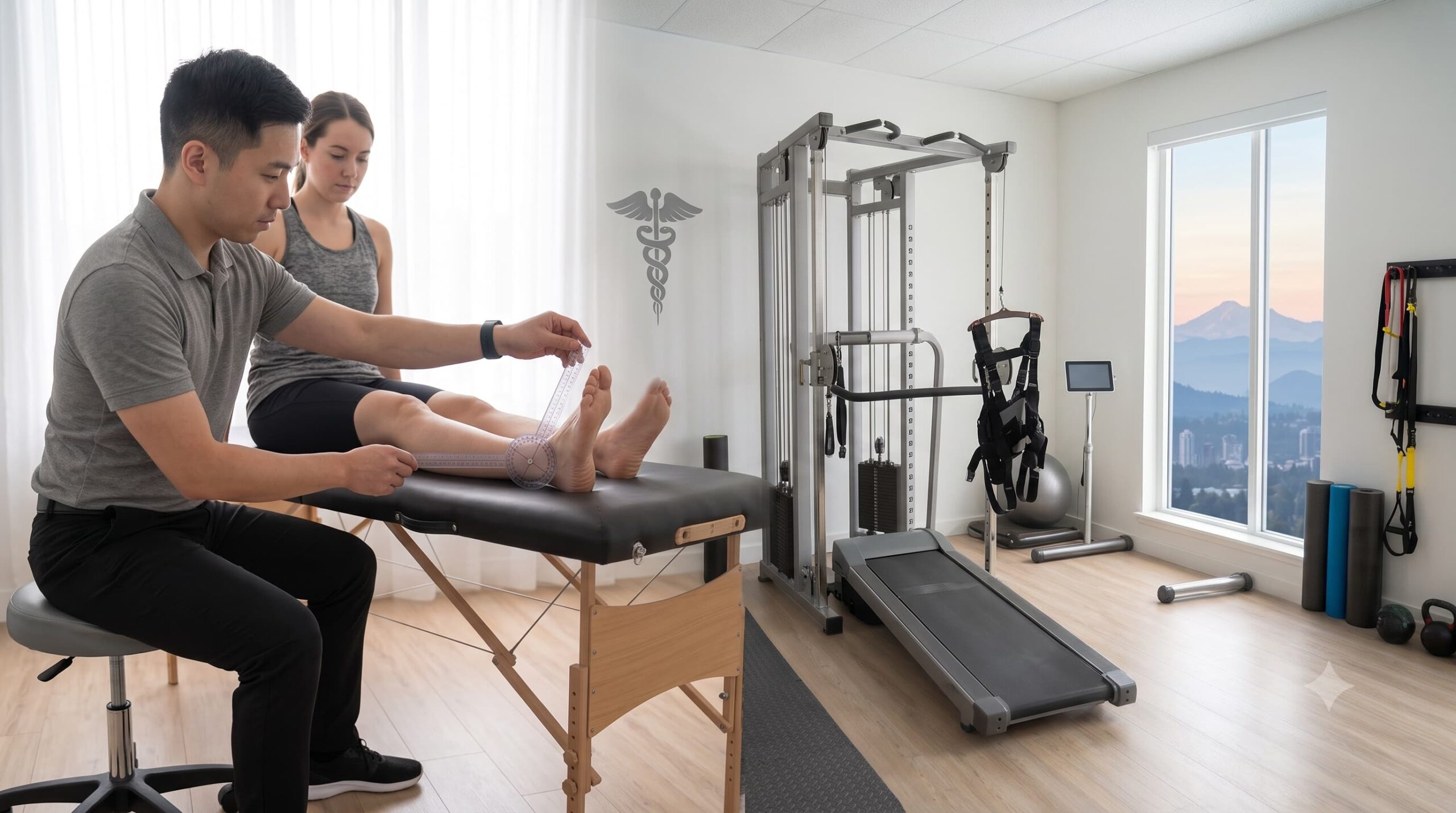
Chronic Pain Prevention: Why Early Intervention After a Car Accident Matters
Important Disclaimer: ICBC policies, fee limits, and coverage guidelines change frequently. The information provided in this article reflects the ICBC Enhanced Care model as of 2026. Please refer directly to the official ICBC website or contact your ICBC claim adjuster for the most up-to-date and accurate information regarding your specific claim parameters. The medical information below is for educational purposes and does not replace a formal clinical assessment.
Chronic Pain Prevention: Why Early Intervention After a Car Accident Matters
It is a story we hear on a weekly basis at Strike Recovery & Performance. A patient is involved in a motor vehicle collision. It might have been a low-speed rear-ender at a Burnaby intersection or a minor parking lot sideswipe. They decline the ambulance at the scene, feeling mostly shaken up but physically intact. Over the next few days, a dull ache and minor stiffness creep into their neck and lower back.
Instead of booking a clinical assessment, they make a very common, yet critical, decision: “It’s just a little stiff. I will give it a few weeks of rest and see if it goes away.”
Fast forward six months. That “minor stiffness” has not gone away. Instead, it has evolved into a daily, agonizing throb. They can no longer turn their head to check their blind spot, sitting at their desk causes radiating pain down their arms, and they have had to completely abandon their gym routine.
Ignoring minor stiffness after a car accident is one of the fastest ways to end up with chronic pain. The transition from a temporary, acute injury to a permanent, chronic pain syndrome is rarely caused by the severity of the crash itself. More often than not, it is caused by the absence of early clinical intervention.
If you are looking for effective motor vehicle accident rehab in Burnaby, you must understand that the clock starts ticking the moment of impact. Early treatment helps tissues heal properly from day one. In this comprehensive guide, we will explore the biomechanics of soft tissue trauma, the danger of the “wait and see” approach, and exactly why early clinical intervention is your best defense against chronic pain.
The Illusion of the “Minor” Fender Bender
To understand why early treatment is non-negotiable, we first need to dispel the myth of the “minor” accident.
Human bodies were simply not designed to absorb the kinetic energy generated by thousands of pounds of metal suddenly colliding. Even in low-speed accidents where vehicle damage is minimal, the transfer of energy to the occupants is massive.
During a crash, your vehicle stops abruptly, but the kinetic energy continues to move through the chassis and into your seat. Your torso is held back by the seatbelt, but your head, neck, and limbs are rapidly thrown into extreme ranges of motion—flexing and extending violently in a fraction of a second. This acceleration-deceleration mechanism forces your joints far beyond their physiological limits.
This sudden whipping motion causes microscopic tearing across a vast network of tissues:
- Ligaments: The strong, fibrous bands that hold your vertebrae together are stretched or sprained, causing joint instability.
- Muscles: Deep stabilizing muscles (like the multifidi in your spine and the deep cervical flexors in your neck) are strained as they reflexively contract in a desperate attempt to brace your body against the impact.
- Fascia: The continuous web of connective tissue that wraps every muscle in your body becomes irritated, inflamed, and tightly restricted.
Why You Feel “Fine” Right After the Crash
The reason you often do not feel this extensive micro-tearing immediately is due to your body’s survival mechanisms. The trauma of a crash triggers a massive dump of adrenaline, cortisol, and endorphins into your bloodstream. These stress hormones act as powerful, natural painkillers, allowing you to function, speak to the police, and get home safely.
It is only after this chemical cocktail wears off—usually 24 to 72 hours later—that the biological reality of the tissue damage sets in, accompanied by severe stiffness and an intense inflammatory response.
The Three Phases of Tissue Healing: Why Timing is Everything
When you sustain a soft tissue injury in a car crash, your body initiates a predictable, biological repair process. This process occurs in three distinct phases. The timing of your rehabilitation must align perfectly with these phases; otherwise, the repair process goes awry.
Phase 1: The Inflammatory Phase (0 to 72 Hours)
Immediately following the injury, your body enters the inflammatory phase. Blood vessels dilate to flood the damaged area with white blood cells, immune agents, and fluid to clear out dead cellular debris and protect the joint. This phase is characterized by localized heat, swelling, and high levels of pain.
- The Goal of Early Intervention: Manage the acute swelling, control the pain, and prevent the nervous system from entering a state of complete panic. Gentle, pain-free movement is introduced to pump out excess fluid.
Phase 2: The Proliferation Phase (3 Days to 6 Weeks)
Once the initial debris is cleared, the body begins repairing the torn muscles and ligaments. It does this by laying down collagen fibers, which form scar tissue.
- The Danger of Inaction: If you simply rest on the couch during this phase, your body lays down this new collagen in a chaotic, disorganized, “criss-cross” pattern—much like a bowl of cooked spaghetti. This unguided scar tissue is incredibly dense, sticky, and restrictive. It binds muscle layers together, causing permanent loss of flexibility.
- The Goal of Early Intervention: Tissues heal based on the mechanical lines of stress placed upon them (a biological concept known as Davis’s Law). Early, guided physical therapy and manual soft tissue manipulation force the new collagen fibers to align neatly and parallel to the muscle fibers. This ensures the repaired tissue is strong, pliable, and functional.
Phase 3: The Remodeling Phase (6 Weeks to 12+ Months)
In this final phase, the newly formed tissue matures and strengthens.
- The Goal of Early Intervention: This is where active rehabilitation (Kinesiology) becomes paramount. The tissues must be progressively loaded with weight and resistance to build their structural capacity back to pre-accident levels.
If you delay treatment for a month, you completely miss the crucial Proliferation Phase. You allow your body to build a permanent, disorganized web of scar tissue, virtually guaranteeing long-term stiffness and movement dysfunction.
Central Sensitization: When the Nervous System Malfunctions
There is another, far more sinister reason why the “wait and see” approach leads to chronic pain: the neurological response.
Pain is not simply a signal of tissue damage; it is an alarm system generated by your brain to protect you. When you are injured in a car crash, the alarm rings loudly. Usually, as the tissues heal, the brain turns the alarm down.
However, if an injury is left untreated, the constant barrage of pain signals traveling up your spinal cord and into your brain can actually alter the architecture of your nervous system. The nerves become hyper-excitable. They start firing pain signals in response to normal, non-threatening stimuli—like a light touch, a change in temperature, or simple daily movements.
This condition is clinically known as Central Sensitization.
Once central sensitization sets in, chronic pain becomes its own disease. You may reach a point six months post-accident where your torn muscles have theoretically “healed,” but you are still in agonizing pain because your nervous system has forgotten how to turn the alarm off.
How Early Intervention Stops Central Sensitization
Starting treatment early matters because it intercepts this neurological malfunction. By effectively managing pain in the acute phase through manual therapy, joint mobilizations, and properly dosed movement, we send powerful safety signals to the brain. We prove to the nervous system that the environment is safe, actively preventing the nerves from becoming hyper-reactive.
What Does Early Clinical Intervention Actually Look Like?
There is a common misconception that early physical therapy involves aggressive stretching, heavy lifting, or painful deep tissue work days after a crash. This fear often keeps patients away from the clinic.
In reality, elite-level early intervention is highly precise, gentle, and designed to downregulate your nervous system. At a multidisciplinary clinic like Strike Recovery & Performance, an early treatment plan typically includes:
1. Registered Massage Therapy (RMT) for Sympathetic Downregulation
After a trauma, your body is locked in a state of sympathetic overdrive (fight or flight). An RMT does not just aggressively dig their elbows into your injured muscles. In the early stages, they utilize gentle myofascial release, lymphatic drainage to clear swelling, and targeted trigger point therapy to disarm protective muscle spasms. This physically shifts your nervous system into a parasympathetic (rest and digest) state, which is a fundamental requirement for cellular healing.
2. Chiropractic Care for Joint Tracking
When muscles go into spasm around the spine, they aggressively pull the vertebrae out of their optimal tracking alignment. This limits your range of motion and pinches surrounding nerves. Early chiropractic care utilizes low-force mobilizations to gently restore normal joint mechanics. By taking the mechanical pressure off the joint capsule, localized pain drops significantly.
3. Physiotherapy for Guided Movement
A physiotherapist will prescribe highly specific, pain-free movements designed to maintain tissue glide and prevent scar tissue from binding. This might include gentle nerve flossing (to prevent nerves from getting trapped in developing scar tissue), isometric contractions, and postural endurance education to help you sleep and sit comfortably while you heal.
4. Patient Education and Fear Avoidance
One of the most important aspects of early intervention is psychological. When you are in pain, movement is scary. Patients often develop “fear-avoidance behaviors,” where they stop moving their neck or back entirely out of fear of causing more damage. A clinician provides the education necessary to distinguish between “safe pain” (the normal discomfort of healing tissue) and “dangerous pain.” Overcoming the fear of movement is critical to preventing chronic disability.
Utilizing ICBC Enhanced Care for Immediate Action
The medical and insurance communities understand the profound danger of delaying treatment. That is exactly why the ICBC Enhanced Care model was designed to prioritize immediate clinical access.
If you are injured in a motor vehicle collision in British Columbia, you do not have to wait for a doctor’s referral, a lawyer’s approval, or an insurance settlement to start fixing your body. ICBC automatically pre-approves injured individuals for a comprehensive block of treatments during the first 12 weeks following the exact date of the accident.
With just your active ICBC claim number, you are instantly pre-approved for up to:
- 25 Physiotherapy sessions
- 25 Chiropractic sessions
- 12 Registered Massage Therapy (RMT) sessions
- 12 Kinesiology (Active Rehab) sessions
The 12-Week Window is Not a Coincidence
It is important to recognize that this 12-week pre-approval window is not an arbitrary timeline set by insurance bureaucrats. It perfectly aligns with the critical biological windows of tissue healing—the inflammatory and proliferation phases. ICBC provides these benefits immediately because starting treatment early is the only proven way to mitigate long-term, chronic pain claims.
Seamless Direct Billing in Burnaby
At Strike Recovery & Performance, we believe the only thing you should be focusing on during the first few weeks after a crash is your rehabilitation. As a proud member of the ICBC Recovery Network, we offer full direct billing for your standard pre-approved treatments. Our administrative team manages the ICBC portals and paperwork, meaning you will not face the financial stress of paying upfront and waiting for reimbursements.
Don’t Gamble with Your Long-Term Mobility
Your body is remarkably resilient, but it requires the right environment and the right mechanical inputs to heal correctly after a violent trauma. A car accident is not something you can simply “walk off” or sleep away.
Ignoring minor stiffness after a car accident is one of the fastest ways to end up with chronic pain. If you allow disorganized scar tissue to set in, let your joints freeze, and permit your nervous system to become hyper-sensitized, you are setting yourself up for years of unnecessary suffering and physical limitations.
Do not adopt the “wait and see” approach. The longer you wait, the harder it becomes to reverse the damage. Early treatment helps tissues heal properly from day one, restoring your strength, flexibility, and confidence.
If you have recently been in a collision, take advantage of your ICBC benefits immediately. Our integrated team of Chiropractors, Physiotherapists, and Registered Massage Therapists in Burnaby are ready to guide you out of pain and back to your active lifestyle.
Don’t wait for the stiffness to become permanent. Head to our booking portal, input your ICBC claim number, and schedule your initial assessment with our high-performance rehabilitation team today.
References
- Gifford, L. “Pain, the Tissues and the Nervous System: A conceptual model.” Physiotherapy.
- Bleakley, C. M., et al. “Soft-tissue injuries simply need PEACE and LOVE.” British Journal of Sports Medicine.
- ICBC. “Enhanced Care: Care and recovery benefits.”