

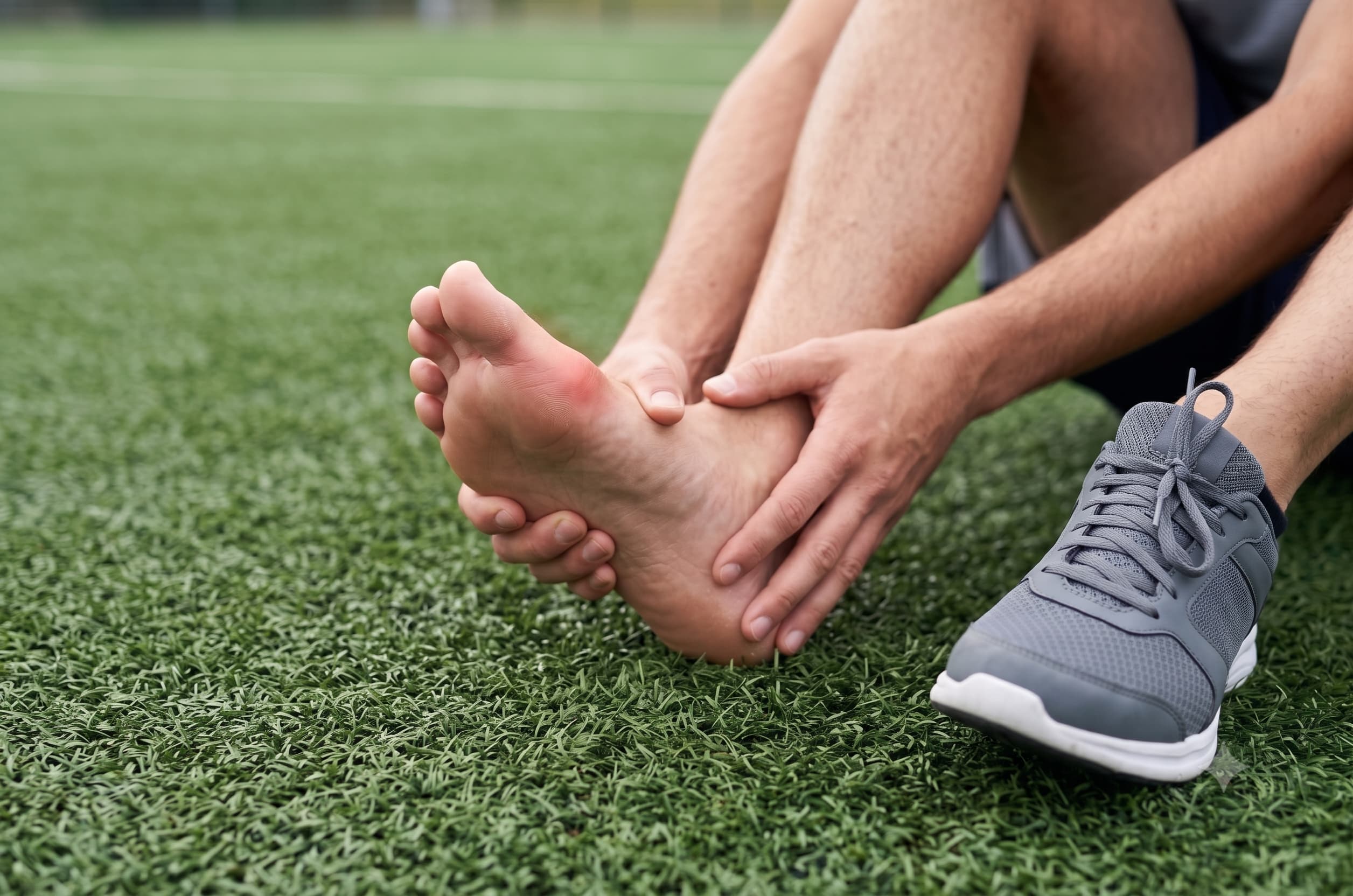
Turf Toe: Why That ‘Minor’ Big Toe Injury Sidelines Athletes
Important Disclaimer: The information provided in this article is for educational and informational purposes only and does not constitute direct medical advice. Knee injuries, particularly those involving catching, clicking, or locking of the joint, require professional clinical assessment. Always consult with a licensed healthcare practitioner or medical doctor for a proper clinical diagnosis and personalized treatment plan before beginning any physical rehabilitation program.
Turf Toe: Why That ‘Minor’ Big Toe Injury Sidelines Athletes
It sounds almost comical—a “toe” injury. But any athlete who’s had turf toe knows it’s no joke. This sprain of the big toe joint can sideline players for weeks and lingers frustratingly long. Understanding why such a small joint causes such big problems—and how to rehab it properly—makes the difference between a clean recovery and a nagging, recurring issue.
What Is Turf Toe?
Turf toe is a sprain of the main joint of your big toe (the first metatarsophalangeal joint). It happens when the big toe is forcefully bent upward beyond its normal range—typically when the foot is planted and the heel rises while the toe stays down, jamming and hyperextending the joint. The name comes from its frequency in athletes playing on artificial turf, where the harder surface and grippy footwear contribute.
Why It’s More Serious Than It Sounds
The key point: Your big toe joint is critical for push-off during walking, running, and jumping. It bears substantial force with every step—far more than its size suggests. When the stabilizing structures of this joint are damaged, every push-off becomes painful, which is why turf toe affects so much of an athlete’s movement.
The joint relies on a complex of ligaments, tendons, and a structure called the plantar plate underneath. Damage to these structures compromises the joint’s stability and function, and because you use this joint constantly, it gets little rest to heal.
Grades of Turf Toe
- Grade 1: Stretching of the joint structures. Mild swelling and tenderness, minimal loss of function. Usually the shortest recovery.
- Grade 2: Partial tearing. More swelling, bruising, pain, and difficulty pushing off. Moderate recovery time.
- Grade 3: Complete tearing of the structures. Significant swelling, bruising, pain, and marked loss of function. The longest recovery, occasionally requiring surgical consideration.
Realistic Recovery Timelines
Grade 1: Often days to 2 weeks, though push-off may be tender longer.
Grade 2: Typically 2-6 weeks before return to sport.
Grade 3: Often many weeks to a few months; severe cases with significant structural damage may require longer or surgery.
These timelines vary considerably. Returning too soon is a common cause of a lingering, recurring problem—the joint needs adequate healing before absorbing full push-off forces again.
How It’s Treated
Early Phase: Protect and Settle
Initial treatment follows sensible acute injury principles: relative rest, managing swelling, and protecting the joint. Stiff-soled shoes or taping that limits the toe from bending upward reduce stress on the healing structures.
Restoring Motion and Strength
As symptoms settle, gentle restoration of pain-free motion, followed by progressive strengthening of the foot and toe, rebuilds the joint’s capacity. Rushing this stage risks re-injury.
Return to Sport
Return is guided by the ability to push off, run, and cut without pain—not just by the calendar. Protective taping or footwear modifications often support the transition back to full activity.
When to Seek Assessment
Any big toe injury with significant swelling, bruising, inability to push off, or pain that isn’t settling deserves assessment. Proper grading guides the recovery plan, and early appropriate management helps prevent a minor-seeming injury from becoming a persistent problem.
Struggling with a stubborn big toe injury? Our physiotherapists can grade your turf toe and build a rehabilitation plan to get you back to sport without lingering problems. Book your assessment.
Medical Disclaimer
This blog post is for informational purposes only. Toe and foot injuries have several possible causes and severities. This is not a diagnosis. See a physiotherapist or physician for proper assessment, especially with significant swelling or inability to bear weight.
Sources & References
- McCormick, J. J., & Anderson, R. B. (2009). The great toe: Failed turf toe, chronic turf toe, and complicated sesamoid injuries. Foot and Ankle Clinics, 14(2), 135-150.
- Bowers, K. D., & Martin, R. B. (1976). Turf-toe: A shoe-surface related football injury. Medicine and Science in Sports, 8(2), 81-83.
- Clanton, T. O., & Ford, J. J. (1994). Turf toe injury. Clinics in Sports Medicine, 13(4), 731-741.
- Anderson, R. B. (2002). Turf toe injuries of the hallux metatarsophalangeal joint. Techniques in Foot & Ankle Surgery, 1(2), 102-111.
- Coker, T. P., Arnold, J. A., & Weber, D. L. (1978). Traumatic lesions of the metatarsophalangeal joint of the great toe in athletes. American Journal of Sports Medicine, 6(6), 326-334.
- Rodeo, S. A., O’Brien, S., Warren, R. F., et al. (1990). Turf-toe: An analysis of metatarsophalangeal joint sprains in professional football players. American Journal of Sports Medicine, 18(3), 280-285.
- George, E., Harris, A. H., Dragoo, J. L., & Hunt, K. J. (2014). Incidence and risk factors for turf toe injuries in intercollegiate football. Foot & Ankle International, 35(2), 108-115.
- Najefi, A. A., Jeyaseelan, L., & Welck, M. (2018). Turf toe: A clinical update. EFORT Open Reviews, 3(9), 501-506.